Your child gets a new pair of glasses, adjusts to them, and everything seems fine. Then, at the next eye exam, the prescription has changed again.
For many families, this becomes an expected part of childhood. While changing vision is common, stronger glasses every year don't have to be the only approach.
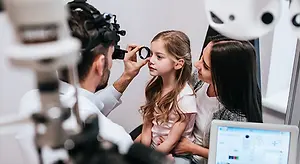
Starting with a pediatric eye exam at EverSquare Eye Clinic, we help families understand how myopia changes over time and what can be done to manage it early.
Why More Children Are Becoming Nearsighted
Myopia, or nearsightedness, makes distant objects appear blurry while close-up vision remains clear. It develops when the eye grows longer than normal, causing light to focus in front of the retina instead of directly on it.
Researchers have seen myopia become increasingly common worldwide. Genetics remain an important factor, but children's daily habits have also changed. Many spend more time using digital devices, reading, and doing other close-up activities while spending less time outdoors.
No single activity causes myopia, and parents shouldn't feel responsible if their child becomes nearsighted. Instead, genetics and environmental factors work together to influence how the eyes develop.
Long-Term Eye Health Risks
As the eye continues to grow longer, the chances of developing higher levels of myopia increase.
High myopia is associated with a greater lifetime risk of serious eye conditions such as retinal detachment, glaucoma, myopic macular degeneration, and cataracts.
This doesn't mean every child with myopia will experience these conditions. It does highlight why slowing myopia progression during childhood has become an important part of modern pediatric eye care.
Early Action Can Make a Difference
Children's eyes develop rapidly throughout childhood, creating an opportunity to manage myopia while those changes are still taking place.
The goal of myopia control isn't to reverse nearsightedness. It's to slow how quickly the eye grows, helping reduce the rate at which prescriptions increase over time.
That shift has changed the conversation from simply updating eyeglasses each year to taking a more proactive approach to children's vision.
Evidence-Based Myopia Management
Every child experiences myopia differently, so treatment begins with an individualized assessment. Your eye doctor will consider your child's age, prescription, rate of progression, and overall eye health before recommending a management strategy.
Today, several evidence-based approaches are available to help slow myopia progression. Depending on the child, these may include atropine eye drop therapy, overnight contact lenses, or specialized eyewear.
Myopia Control Glasses
One of the most effective tools available today is MiYOSMART lenses.
These lenses look much like traditional glasses but are designed to do more than sharpen distance vision. Their specialized lens technology creates peripheral defocus, an approach supported by clinical research that helps slow eye growth while providing clear vision for everyday activities.
Because children wear them just like regular glasses, MiYOSMART lenses fit easily into daily life.
Supporting Healthy Vision Every Day
While genetics play a major role in myopia, healthy visual habits can support your child's overall eye health.
Encourage your child to:
- Spend time outdoors each day.
- Take regular breaks during reading and screen use.
- Hold books and digital devices at a comfortable working distance.
- Keep up with routine eye exams to monitor vision changes.
These habits complement a myopia management plan but don't replace professional treatment.
Proactive Pediatric Eye Care in Edmonton
If your child's prescription continues to change each year, it may be time to discuss more than a new pair of glasses.
At EverSquare Eye Clinic, we provide comprehensive children's eye exams and personalized myopia management. By monitoring your child's vision as they grow, we can recommend strategies that support both clear sight today and healthier eyes for the future.
Book your child's eye exam today to start their long-term vision care plan.
Progressive Myopia FAQ
How do I know if my child's myopia is progressing?
Children with progressive myopia often need stronger glasses at regular eye exams. Your eye doctor can track changes in your child's prescription over time and determine whether the rate of progression suggests they may benefit from treatment.
Can myopia be cured?
While myopia cannot be reversed, research shows that evidence-based treatments can help slow how quickly it progresses in many children. Early intervention gives your eye doctor the best opportunity to manage those changes while the eyes are still developing.
How often should children with myopia have eye exams?
Children with progressive myopia usually benefit from regular eye exams so we can monitor prescription changes and evaluate whether their management plan is working. Your eye doctor will recommend a follow-up schedule based on your child's age, prescription, and rate of progression.